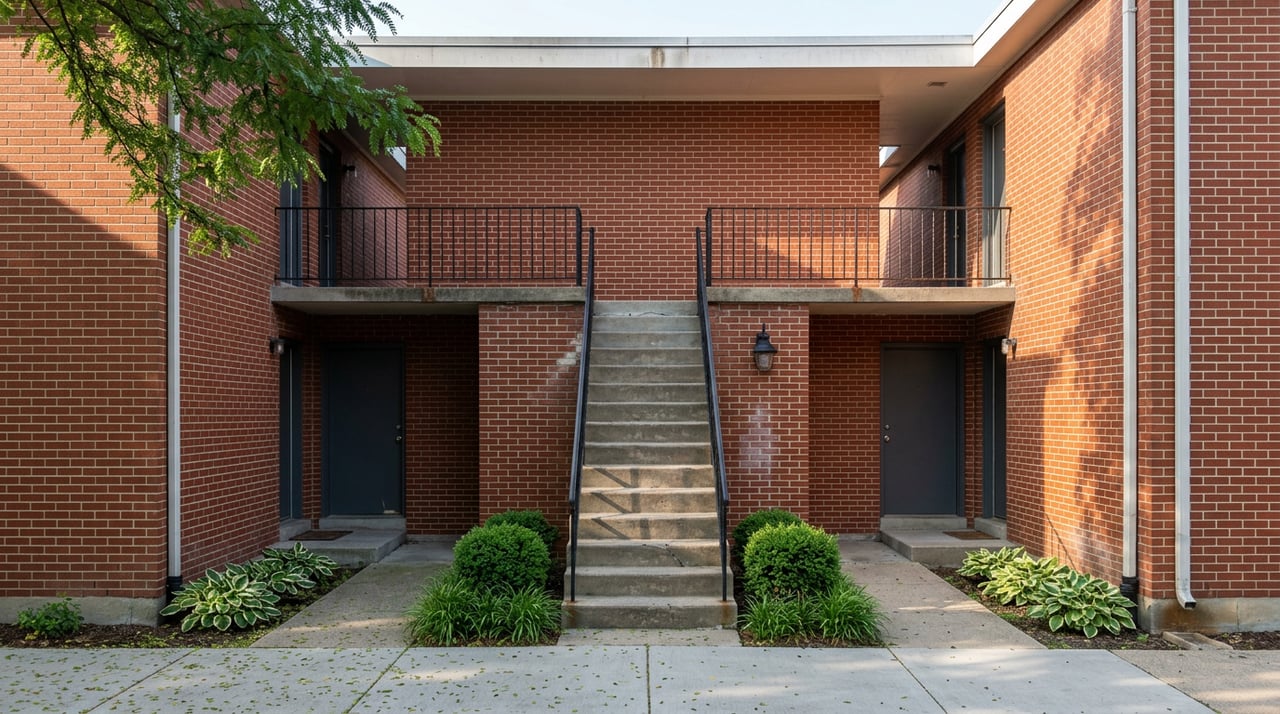
Two nearly identical two-bedroom condos, same square footage, same asking price, same Lakeview six-flat. One closes in five weeks without a hitch. The other stalls in attorney review because the buyer's lender comes back with a single word: non-warrantable. Same building, same price, completely different outcome. The difference has nothing to do with either unit and everything to do with a number neither seller had looked at before listing.
That number is the building's reserve fund status, and as of August 3, 2026, it carries more weight than it ever has. If you're a Chicago condo owner planning to sell this year and buy in Oak Park, River Forest, or another western suburb, the price you think your unit will fetch depends less on your comps and more on whether your association's finances clear a bar that just moved.
What Changed on March 18, and What Kicked In on August 3
On March 18, 2026, Fannie Mae and Freddie Mac issued matching rule changes for condo financing. Fannie Mae published Lender Letter LL-2026-03. Freddie Mac published Guide Bulletin 2026-C the same day. Both raised the minimum share of a condo association's annual budget that must go toward replacement reserves from 10 percent to 15 percent. Both also retired their fast-track review paths, Fannie's Limited Review and Freddie's Streamlined Review, for any loan application dated on or after August 3, 2026.
That date has already passed. Every condo loan application submitted from that point forward requires either a Full Review of the association's finances or a qualifying Waiver of Project Review. There's no more shortcut for a lender who wants to move quickly on a straightforward building.
The trigger is the application date, not the closing date. A buyer whose lender submitted the file on August 2 can still close in October under the old Limited Review path. A buyer whose application lands August 4 cannot, even if they're buying in the same building the week before. That distinction matters if you're currently under contract or about to list, because it means two buyers on the same unit, weeks apart, can face entirely different underwriting timelines.
Two Different Percentages, One Word
Here's where the confusion sets in, and where a seller can misjudge their own building's risk. The new 15 percent rule is a contribution rate. It measures what share of this year's budget the board is directing into reserves. It says nothing about how much money is actually sitting in the reserve account relative to what the building will eventually need.
That second number, called percent funded, comes from a professional reserve study that inventories the roof, elevators, boilers, and other big-ticket common elements, estimates their remaining life, and calculates what the association should have saved by now. A building can adopt a budget that satisfies the federal 15 percent floor this year while still sitting on a reserve account that covers a fraction of its real long-term need, especially if the board is only now catching up after years of underfunding.
| What it measures | Who sets the bar | What it doesn't tell you | |
|---|---|---|---|
| Reserve contribution rate | Share of this year's budget assigned to reserves | Fannie Mae and Freddie Mac, 15 percent floor as of August 3, 2026 | Whether the account already holds enough money |
| Percent funded | Current reserve balance against the reserve study's ideal balance | No state mandate in Illinois, industry practice only | Whether next year's budget keeps pace with rising repair costs |
A vintage building can clear the contribution rate this year and still be years behind on percent funded. A newer building can clear both easily simply because its major systems haven't needed work yet. Neither number alone tells the whole story, which is exactly why a seller who only asks "do we have a reserve fund" is asking the wrong question.
Why This Lands Harder in Chicago
Chicago's condo stock skews older than most metro markets, with prewar walk-ups, courtyard buildings, and mid-century mid-rises that carry decades of masonry, tuckpointing, boiler, and window work still ahead of them. Buildings built during the early-2000s boom are now hitting their first cycle of major component replacements too, which means even relatively young associations are facing capital costs many boards never fully budgeted for.
Roughly a third of Chicago condo buildings carry active FHA approval as of 2026, which means the rest depend almost entirely on conventional financing through Fannie Mae or Freddie Mac. For those buildings, the new reserve and review requirements aren't a background compliance detail. They're the mechanism that determines whether a buyer can get a loan at all. A building that loses warrantable status doesn't just lose some buyers, it loses the entire conventional lending pool, pushing anyone still interested toward portfolio loans that carry higher rates and larger down payment requirements. That shrinks demand in a way the listing price never reflects.
If you're selling a Chicago condo to fund a purchase in the western suburbs, that's the risk that can quietly extend your timeline. A softer buyer pool doesn't always show up as a lower offer. Sometimes it shows up as a slower one, or as a financing contingency that falls apart three weeks into attorney review.
The Document That Tells You Before Your Buyer's Lender Does
Illinois law already gives sellers a way to see this coming. Section 22.1 of the Illinois Condominium Property Act requires the association to hand over a defined packet of documents to any prospective buyer on request, and the same packet tells a seller exactly what a lender will find. It includes the declaration, bylaws, and rules, a statement of any liens or unpaid assessments, a statement of anticipated capital expenditures for the current and next two fiscal years, the status and amount of the reserve fund, the association's audited financial statements or receipts and disbursements, and the status of any pending litigation.
Under the statute, once a written request is made, the association's designated officer has ten business days to produce it. The association can charge a fee, capped at $375 and adjusted annually for inflation, with an additional $100 allowed for 72-hour rush service.
Most sellers wait for a buyer to request this packet during attorney review. That's the expensive way to find out your building has a capital project on the horizon or a reserve account that's thinner than you thought. Pulling it before you list gives you time to price accordingly, get ahead of board questions, or decide whether now is even the right moment to sell.
A Pre-Listing Checklist Before You Buy in the Suburbs
- Request your Section 22.1 packet from the association before you list, not after you have an offer.
- Ask specifically for the percent-funded figure from the most recent reserve study, not just confirmation that a reserve fund exists.
- Confirm whether your building carries FHA or VA approval, since that determines how much of your buyer pool depends on the new Fannie Mae and Freddie Mac rules.
- Read board meeting minutes from the last 12 to 18 months for any capital project discussion, even informal.
- If your building is older or has any history of special assessments, build extra time into your closing timeline, since a Full Review takes longer than the retired Limited Review path did.
- Coordinate your sale timeline against your suburban purchase with enough cushion that a financing delay on the condo side doesn't jeopardize your move.
A Few Questions That Come Up
Does this rule apply if my buyer is paying cash? No. The reserve and review requirements only govern loans sold to Fannie Mae or Freddie Mac. A cash buyer sidesteps the whole issue, though it also means your buyer pool for that path is smaller by definition.
Does a higher HOA fee mean my building is better funded? Not necessarily. A higher monthly fee can reflect strong reserves, or it can reflect a board playing catch-up after years of keeping fees artificially low. The fee amount alone doesn't answer the question, the percent-funded figure does.
What if my building already has an active special assessment? That has to appear in your Section 22.1 disclosure under the anticipated capital expenditures item. Getting ahead of it, rather than letting a buyer discover it mid-transaction, gives you room to negotiate who pays it before you're locked into a contract.
If you're weighing whether to sell your Chicago condo now or wait, or whether renting it out makes more sense while you settle into a home in Oak Park or River Forest, that decision deserves its own look at the numbers specific to your building. Laura Garcia and the JLG Group work with clients making exactly this move from city condo to western suburb single-family home, and can help you read your association's financials before you list, not after a deal falls apart. Request your free home valuation to start with a clear picture of what your unit is actually worth in today's financing environment.